J.B.Gattini, The Tuesday We All Remember
Some dates never remain simply dates on a calendar; they divide life into before and after. September 11, 2001, was one of them. Twenty-five years have passed, yet ask almost anyone who lived through that day where they were when they first heard that planes had struck the World Trade Center and that America was under attack, and they will probably remember. I certainly do.
It was a Tuesday morning, and for me it began as an ordinary day. I was living in Astoria, Queens, with my husband and daughter and getting ready to go to a meeting of Bryant Park Toastmasters, the public-speaking club I belonged to at the time. We met for an hour during lunch in the Edelman building in Times Square, and I planned to take the subway into Manhattan. The television was on while I was getting ready, but I was only half listening; it was background noise until something on the screen suddenly caught my attention.
A plane had hit one of the Twin Towers.

Family members gather for the annual 9/11 Memorial and Museum anniversary ceremony in New York, NY on Tuesday, Sept. 11, 2018. Photo by Ben Hider, 9/11 Memorial
My first thought was that it had to be a terrible accident, perhaps a pilot had lost control. Even the television commentators seemed unsure of what they were watching. Then the second plane struck the other tower, and in that instant everything changed. It was obvious that this was no accident. My Toastmasters meeting disappeared from my mind, along with nearly everything else I had planned that day.
My first real thought was my daughter.
She was at school on the Upper West Side while we were in Queens, and suddenly Manhattan, normally so close, seemed impossibly far away. Bridges and tunnels were being closed, public transportation was disrupted, and no one really understood what was happening.
In moments like that, the world becomes very small. You are not thinking about geopolitics or history; you are thinking only about the people you love. Where is my child? Is she safe? How do we get to her?
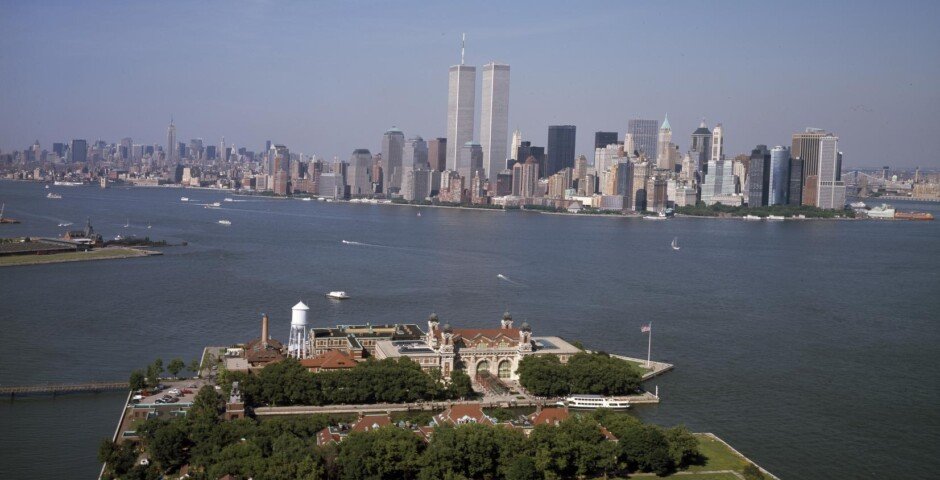
Fortunately, my husband found a solution. His car had press identification, and the police allowed him to cross the Queensboro Bridge. He was able to reach our daughter and bring her safely home. Only then could we begin trying to understand what had happened, although nothing about that day felt understandable. The familiar New York skyline had changed before our eyes, and images that should have belonged in a disaster movie were unfolding only a few miles from our home.
What I remember almost as vividly as the images is the smell. For days afterward, and in my memory for much longer, the smell of what had burned downtown lingered in the air. It was an unsettling reminder that what we had watched on television was not television at all. It was here. It was real. Nearly 3,000 people had lost their lives, and thousands of families would never again experience September 11 as an ordinary date.
Two days later, on Thursday, September 13, my husband and I had tickets for an evening at the Metropolitan Opera House. We seriously considered not going. New York was still in shock, and attending the opera somehow seemed inappropriate while the devastation downtown was still so raw. In the end, however, we decided to go because life had to continue.
I remember entering that magnificent hall and seeing it half empty. Security checked our bags, people spoke quietly, and an extraordinary sadness seemed to hang in the air. I no longer remember what opera we saw that evening, but I remember the atmosphere with remarkable clarity. Perhaps that matters more. We were not there because we had forgotten what had happened only two days earlier; we were there because we had not forgotten, and because somehow New York had to begin living again.
Not long afterward, I attended a meeting with Michael Bloomberg, who was then running for mayor of New York City. The room was packed, and although I no longer remember most of what he said about his plans for the city, one phrase stayed with me until now: “We will heal.” That is how I remember it after all these years.
At the time, those words felt almost improbable. New York did not feel healed. It felt wounded, frightened, and uncertain, yet here was someone talking about a future. When the meeting ended, people crowded around him, reaching out to shake his hand.
Somewhere in that crowd, quite unexpectedly, he reached through the people around him and took mine. It lasted only a moment, but I remember it still. Perhaps in those weeks after September 11, small human gestures carried more weight than usual: a handshake, a stranger helping another stranger, a theater reopening its doors, someone quietly saying, We will heal.
And eventually, New York did heal, although healing is not the same as forgetting.
That is perhaps one of the enduring lessons of September 11. Peace and safety can never be taken entirely for granted. We often speak about peace as though it were simply the absence of war, but perhaps it begins much earlier, in how we see another human being. Violence often begins when someone becomes the other, when differences become more important than shared humanity, and when another person’s life somehow begins to seem less valuable.
Never forget.
But also—never forget to live.
Photo (above) credit: Carol M. Highsmith, Library of Congress, Prints and Photographs Division.
You May Also Like