EMN - Enlightenment Media News - Benevolent News Presented With Love

Cart

Articles and Interviews

J.B. Gattini, I Could See the Security Council. I Just Couldn’t Hear It.

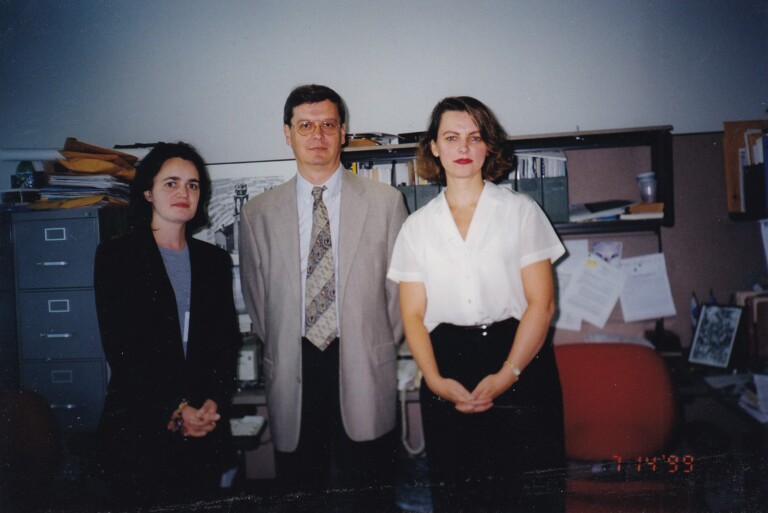
More than twenty-five years ago, J.B. Gattini, Founder of Enlightenment Media News, arrived at UN Radio hoping to understand how the United Nations worked from the inside—and discovered that sometimes the most revealing lessons come from unexpected places. As the 2026 UN General Debate begins, she looks back at her experience and asks a question that remains as relevant as ever: once the speeches are over, will the world turn words into action?

Read More »

J.B.Gattini, The Tuesday We All Remember

A personal remembrance of September 11, 2001, told through the ordinary moments that suddenly became unforgettable: a television left on in the background, the urgent need to reach a child, and a shaken New York trying to move forward. Twenty-five years later, the memories remain a powerful reflection on loss, resilience, healing, and the fragile value of everyday lif

Read More »

UN General Assembly 2026: Dates, Priorities and What to Watch

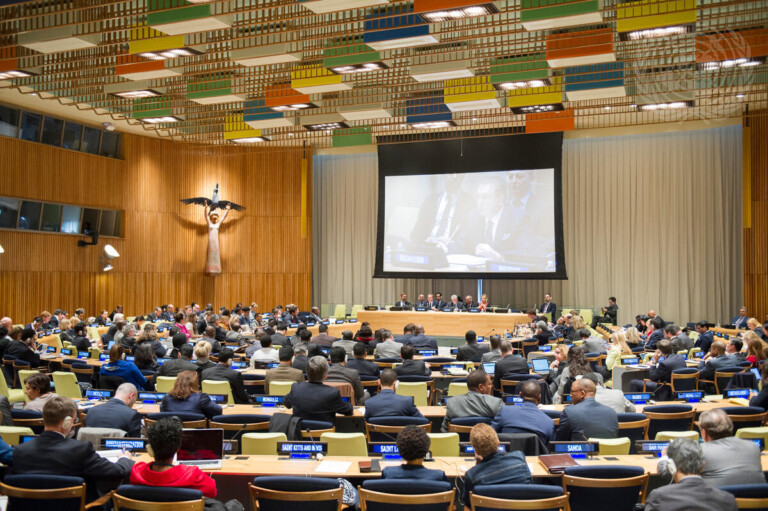
At a time of war, geopolitical rivalry, climate pressure and declining trust in international institutions, the world’s most universal diplomatic forum is opening a new session. The 81st United Nations General Assembly begins in New York on September 8, 2026, bringing together representatives of 193 Member States. This overview looks at the key dates, leadership, major meetings and priorities that will shape the session — and at what may be António Guterres’s final General Assembly opening as UN Secretary-General.

Read More »
Photo: UN Photo/Loey Felipe

Who Will Lead the United Nations Next? Eight Candidates Compete to Succeed António Guterres

The United Nations is choosing a new Secretary-General to succeed António Guterres in January 2027, with eight candidates currently in the race. The article explains who the candidates are, how the Security Council and General Assembly make the final decision, and why the five permanent Security Council members hold enormous influence over the outcome. It also asks a larger question: what kind of leader does the UN need in a time of war, geopolitical tension, technological change and declining trust in global institutions

Read More »

Can the United Nations Reinvent Itself?

Can the United Nations adapt to the realities of the modern world? This article explores UN reform, Security Council veto power, institutional privilege, global agreements, and how collective intelligence could help turn good ideas into practical solutions.

Read More »

NASA’s Roman Telescope Begins Its Journey Into the Hidden Universe

NASA’s newly launched Nancy Grace Roman Space Telescope is beginning an ambitious mission to explore some of the universe’s greatest mysteries, including dark matter, dark energy, and distant galaxies. With a field of view far wider than Hubble’s, Roman is also expected to discover thousands of planets beyond our solar system and give scientists an unprecedented large-scale view of the cosmos.

Read More »

Iceland Chooses Not to Reopen EU Membership Talks

Icelandic voters rejected a proposal to restart negotiations on joining the European Union, with 52.8% voting against the move. Concerns about protecting Iceland’s fishing industry and national control played an important role, while supporters argued that closer EU integration could bring greater economic stability. The result means Iceland will remain outside the EU while continuing its close economic and political relationship with Europe.

Read More »

Does the 21st Century Need a New Human Right? An Interview with Dr. Saulius Norvaišas, Author of the Concepts of Collective Intelligence and Omnicracy

Article 21 of the Universal Declaration of Human Rights states that everyone has the right to participate in the government of their country, directly or through freely chosen representatives. If people have a right to participate in governance, should they also have a right to participate in the search for solutions and in the final decisions that affect their lives?

Read More »
Jane Evershed, Other World

Frank D. Sears, ACIM: A User’s Manual for Humanity

The article presents A Course in Miracles as a possible “user’s manual for humanity” — a guide for recognizing how fear, guilt, judgment, and the belief in separation shape our perception of ourselves and the world. Rather than trying to fix life entirely from the outside, ACIM invites us to look within, question the interpretations that disturb our peace, practice forgiveness, and become willing to “choose again.” Ultimately, the article suggests that the Course is not a manual for making humanity more comfortable within its illusions, but for awakening from them and remembering our deeper identity in love and peace.

Read More »
Stacey Littledeer, Love the Bear

Robert D. Sears, The Resistance to True Forgiveness

Forgiveness is easy to admire in theory—and much harder to practice when we feel deeply hurt. In this thoughtful exploration of A Course in Miracles, Robert D. Sears looks beyond conventional ideas of forgiveness and asks what it might mean to release the interpretations, grievances, and identities that keep us bound to pain. His article offers a compassionate reflection on forgiveness not as weakness or denial, but as a path toward inner freedom, peace, and spiritual awakening.

Read More »

Tracy Kolenchuk, Causes and Consequences of Illness and Cure

Causes of illness are present in deficiencies, excesses, and disharmonies of attributes and processes in the six domains of life, of health, and of illness: diet, body, mind, spirits, communities, and environments. The cure is to address the cause in the specific case.
Signs and symptoms of illness are negative consequences on the body, mind, spirits, and communities. Learn more….

Read More »
FB video

Dr. Saulius Norvaišas, Collective Intelligence: Society Learning to Use Its Own Mind, Part III: Why the Idea Must Stand Without the Name

The article argues that valuable ideas are often overlooked because people judge the status, reputation, or authority of the person presenting them rather than the quality of the idea itself. It introduces the principle of accountable anonymity, a key feature of Collective Intelligence, which allows ideas to be evaluated fairly without social bias while still ensuring that contributors remain responsible and receive recognition for their contributions.

Read More »

Dr. Saulius Norvaišas, Collective Intelligence, Society Learning to Use Its Own Mind, Part IV: How the Mechanism of Collective Intelligence Works

This article explains the practical mechanism of Collective Intelligence—a structured process that enables individuals to contribute ideas, evaluate them fairly, and build solutions together. Using everyday examples, it demonstrates how anonymous yet accountable participation, thoughtful evaluation, and systematic analysis can turn scattered opinions into shared wisdom.

Read More »

Dr. Saulius Norvaišas, Collective Intelligence, Society Learning to Use its Own Mind, Part V: How Collective Intelligence Liberates Competence

In an era of increasing complexity, no organization, government, or society can afford to ignore the intelligence already present among its people.
This article argues that true competence is found throughout society—not only among people with titles or authority. It explains how Collective Intelligence helps identify and use the best ideas by evaluating them on their merit, allowing organizations and societies to make wiser, more effective decisions.

Read More »
CHANGE THE WORLD PROJECT
LATEST VIDEOS
RECOMMENDED VIDEOS