The United Nations has many critics. It is called bureaucratic, expensive, politically divided and sometimes powerless precisely when the world needs it most.
And yet, perhaps the best thing about the United Nations is very simple: it already exists.
We do not need to invent another global organization from scratch. We already have one where virtually every nation on Earth can sit at the same table. The question is whether an institution designed for the world of 1945 can be sufficiently reformed for the world of 2026 — and beyond.
That question has become increasingly urgent. Secretary-General António Guterres launched the UN80 Initiative, a broad reform effort intended to reduce duplication and bureaucracy, review thousands of mandates accumulated over decades, relocate some functions to lower-cost locations and reconsider how different parts of the UN system work together. The UN reports that reforms already underway include a 21 percent reduction in Secretariat staff positions for 2026 and the relocation of hundreds of posts from expensive duty stations to lower-cost locations.
These are meaningful changes. But perhaps genuine reform needs to go deeper.
What If the UN Were Somewhere Else?
Years ago, I found myself entertaining a somewhat provocative thought: What if the United Nations Headquarters were moved from New York to an African country?
Imagine what would happen.
New York provides diplomats with one of the world’s most exciting cities, exceptional restaurants and cultural life, along with the privileges traditionally associated with diplomatic service. Would the same number of people be equally enthusiastic about international service if UN Headquarters were located in a developing country where daily life was less comfortable?
It is admittedly an unconventional idea, but there is a serious question behind it:
Who should international institutions attract — those who value the prestige of international diplomacy, or those genuinely motivated to improve the world?
Perhaps moving the UN is neither practical nor necessary. But decentralizing more of its work away from the world’s most expensive cities might change not only costs, but perspective. Interestingly, the UN80 reform process is already moving some positions from high-cost locations to lower-cost duty stations.
When Agreements Meet Reality
The United Nations has also helped create an extraordinary body of international law: treaties and conventions addressing war, human rights, refugees, nuclear weapons, the environment and many other global problems.
The difficulty is not always producing principles with which nations can agree. The difficulty is applying those principles when national interests, ideologies and geopolitical rivalries collide.
Consider nuclear weapons.
The Treaty on the Prohibition of Nuclear Weapons, adopted at the United Nations on July 7, 2017, prohibits participating states from developing, possessing, stockpiling, using or threatening to use nuclear weapons. It entered into force in 2021. As of August 2026, it had 95 signatories and 75 States Parties.
That is hardly insignificant.
But the central problem remains: the nuclear powers whose participation would matter most have not joined the prohibition. The treaty therefore illustrates both the potential and the limitations of international agreements. Humanity can agree on an admirable principle while remaining politically unable to implement it universally.
The Veto Paradox
Nowhere is the contradiction more obvious than in the UN Security Council.
Its five permanent members — China, France, Russia, the United Kingdom and the United States — retain veto power, reflecting the political realities that existed when the UN was created after World War II.
But what happens when a permanent member is itself involved in a conflict that the Security Council is supposed to address?
How can an institution responsible for maintaining international peace function effectively when one of the parties whose actions are being questioned can prevent the Council from acting?
There are no easy answers. Removing or changing the veto would itself require political agreement from states possessing enormous power and little incentive to surrender it.
Nevertheless, Security Council reform is now formally part of the UN’s broader agenda. The Pact for the Future commits member states to making the Council more representative, inclusive, transparent, effective and accountable, with particular attention to Africa’s longstanding underrepresentation.
Perhaps Reform Also Requires a Different Way of Thinking
Institutional reform usually focuses on structures: budgets, departments, seats, voting rules and mandates.
Those things matter.
But perhaps the UN also needs better mechanisms for dealing with ideas.
Governments generally arrive at international negotiations carrying already established national positions. Proposals quickly become associated with countries, political blocs or ideologies. A useful idea may be rejected not because the idea itself is bad, but because of who proposed it.
This is where the concept of Collective Intelligence, developed by Dr. Saulius Norvaišas, becomes particularly interesting.
Instead of immediately dividing proposals according to political camps, a collective-intelligence platform could allow ideas to be examined, developed, compared and improved on their merits. Contributions from governments, experts, organizations and perhaps eventually ordinary citizens could be organized into workable proposals rather than simply competing positions.
Such a system would not replace diplomacy or democratic decision-making. Nor would technology magically remove conflicts of interest.
But it could help answer a question that existing institutions struggle with:
How do we find the best ideas humanity already possesses — and turn them into practical solutions?
That may ultimately be the most important reform of all.
The United Nations was created after humanity experienced one of the darkest periods in its history. Its founders understood something profoundly important: nations need a place where they can continue talking even when they profoundly disagree.
Eighty years later, the organization is imperfect, cumbersome, and sometimes frustrating. But tearing it down and beginning again may not be the answer.
We already built the table.
Perhaps it is time to improve who sits around it, how decisions are made, how ideas are evaluated — and what we expect from the people who come there to serve the world.
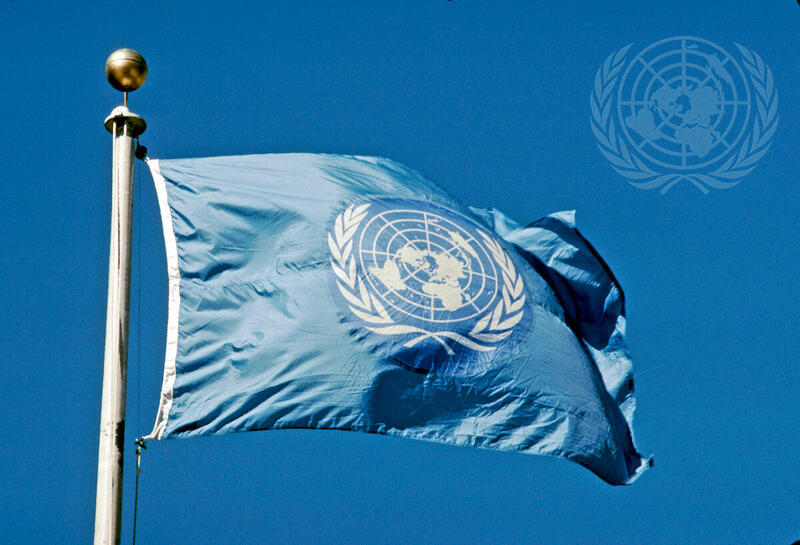
Photo credit: UN Multimedia – UN Photo reference: UN7779374