Robert D. Sears, When Profit Loses Its Soul
“For what shall it profit a man, if he shall gain the whole world, and lose his own soul?”
Mark 8:36
There are few questions more uncomfortable than this one, because it does not ask what we own. It asks what owns us.
It does not ask whether we succeeded. It asks what we became in the process.
It does not ask whether the world applauded. It asks whether something sacred was traded away for the applause.
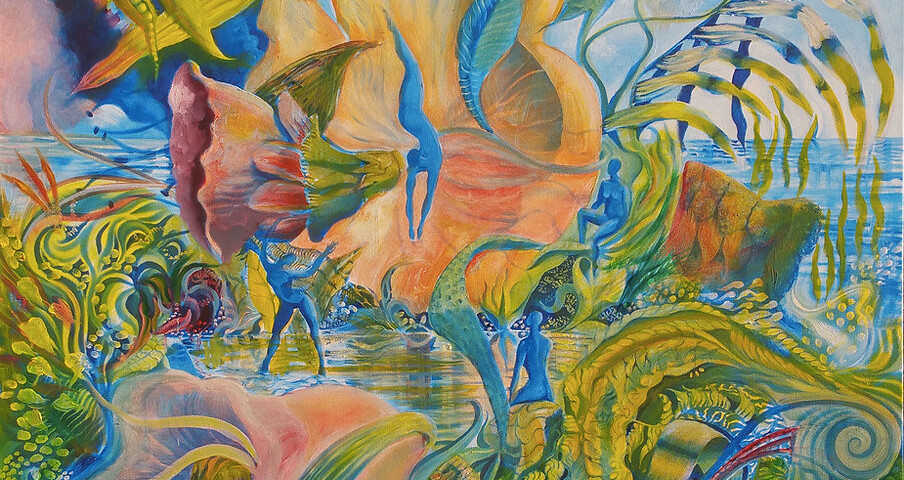
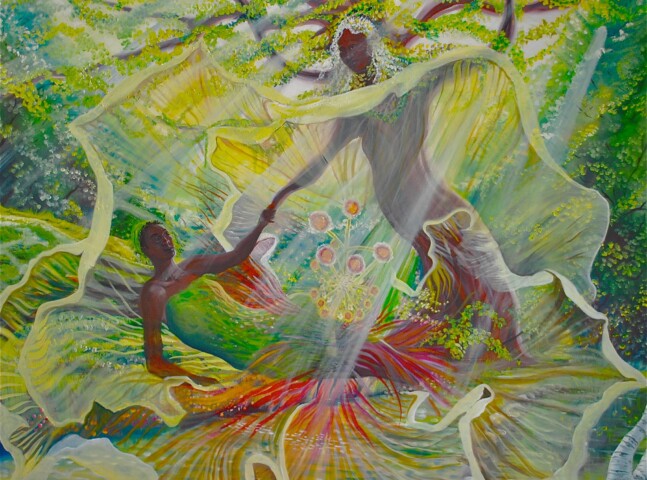
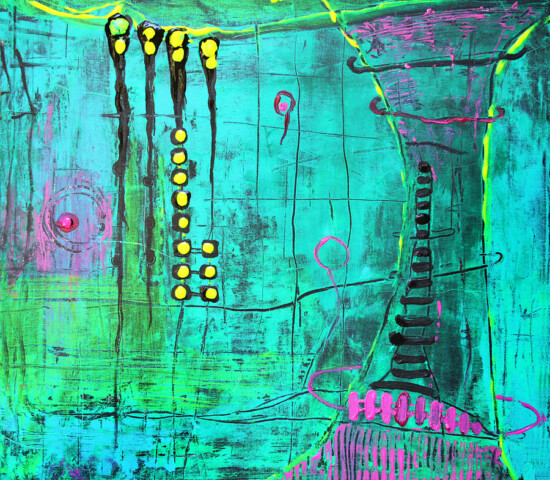
Painting from the EMN Online Museum of Art by Lolita Bronzini, Emerald World, Acrylic on Canvas, 36x36In
For centuries, this verse has been applied to individuals. The ambitious man. The greedy man. The man who climbs the ladder only to discover it was leaning against the wrong wall. The man who wins the argument and loses the relationship. The man who gains wealth, influence, reputation, and control, yet wakes one day to find he has misplaced the only thing that ever made any of it meaningful.
But perhaps the question is larger than one man.
Perhaps we should ask it of nations.
Perhaps we should ask it of institutions.
Perhaps we should ask it of corporations.
What profiteth a corporation if it gains the whole market and loses its soul?
That may sound poetic, but it is not merely poetry. It is the central moral question of modern life. We live in a world where nearly everything has been monetized. Sickness is a market. Aging is a market. Loneliness is a market. Attention is a market. Fear is a market. Even outrage has become a product, carefully packaged and sold back to us in hourly installments.
We are told this is just business.
But “just business” has become one of the most dangerous phrases in the human vocabulary. It is the small verbal curtain we pull over the face of conscience when we do not want to look directly at what we are doing.
Just business.
Just shareholders.
Just competition.
Just quarterly earnings.
Just market strategy.
Just growth.
The trouble begins when profit ceases to be the reward for serving human need and becomes the reason human need must never be fully satisfied.
That is the pattern.
A healed patient is a miracle to the patient, but a lost customer to a system that profits from permanent treatment. A durable product is a blessing to the consumer, but a problem for a company built on repeat sales. A repairable machine is good for the owner, but bad for the manufacturer who wants control over parts, software, service, and replacement cycles. A cleaner, cheaper, decentralized source of energy would be liberation for the household, but a threat to any empire built on dependency.
This does not mean every corporation is evil. That is too easy, and too lazy. Corporations are made of people, and many people inside them are sincere, decent, hardworking, and even idealistic. Many discoveries have saved lives. Many technologies have improved comfort, safety, and opportunity. Many companies have done real good.
The issue is not that profit exists.
The issue is what happens when profit becomes sacred.
There is a difference between making money by solving a problem and making money by preserving the problem.
A doctor may profit from healing, and there is nothing immoral in that. A builder may profit from creating a safe home. A farmer may profit from feeding people. An inventor may profit from a useful invention. Profit, in its cleanest form, can be a sign that value has been exchanged.
But when the profit depends on the wound remaining open, something has gone wrong.
When sickness is more profitable than health, the soul is in danger.
When breakdown is more profitable than durability, the soul is in danger.
When dependence is more profitable than freedom, the soul is in danger.
We do not need to prove that every cure has been buried, every engine suppressed, or every revolutionary invention stolen in a smoke-filled room. That kind of claim is too broad, too dramatic, and too easy to dismiss. The deeper truth is both simpler and more damning: the incentive system itself bends human behavior toward the protection of revenue.
If a company makes billions from a drug that manages a disease, what happens when a smaller company develops something that may reduce the need for that drug? Does the larger company celebrate the liberation of patients? Sometimes, perhaps. But sometimes it buys the smaller company. Sometimes the competing project disappears into a filing cabinet, a strategic review, a budget decision, or the quiet graveyard of “not commercially viable.”
No villainous laughter is required.
No black cape is necessary.
The spreadsheet is enough.
This is why moral blindness is so dangerous. Evil rarely introduces itself as evil. It presents itself as efficiency. It calls itself fiduciary responsibility. It hides behind departments, committees, legal opinions, and carefully polished language. By the time harm reaches the public, no single person feels responsible. Everyone only did his job. Everyone followed procedure. Everyone served the system.
And the system, having no conscience of its own, did exactly what it was designed to do.
It protected itself.
This is the real danger of corporate greed. Not that greedy people exist. Greedy people have always existed. The greater danger is that greed can be organized, legalized, rewarded, and normalized until it no longer looks like greed at all. It looks like success.
We praise growth without asking what is growing.
We praise innovation without asking whom it serves.
We praise efficiency without asking what has been removed.
We praise shareholder value without asking whose value was sacrificed.
Then we act surprised when the world feels colder, sicker, more disposable, and more afraid.
The light bulb gives us a nearly perfect parable. A product that lasts too long becomes a business problem. A customer who does not need to return is bad for sales. Durability, which should be a virtue, becomes an obstacle. The object is no longer to make the best thing possible. The object is to make the most profitable thing repeatable.
Once that logic takes over, the consumer is no longer a person to be served. He becomes a revenue stream to be maintained.
And isn’t that the whole modern disease?
We are no longer patients. We are healthcare consumers.
We are no longer citizens. We are data points.
We are no longer neighbors. We are demographics.
We are no longer souls. We are markets.
This is where the scripture returns with full force.
“What shall it profit a man?”
The question is not anti-money. It is anti-idolatry.
Money is not evil. But money becomes destructive when it is permitted to answer questions it has no moral authority to answer. Money can tell us what sells. It cannot tell us what heals. Money can tell us what grows. It cannot tell us what blesses. Money can tell us what people will pay for. It cannot tell us what people should be forced to endure.
The marketplace is a useful servant, but a monstrous god.
When the market becomes god, everything sacred must justify itself in financial terms. Health must justify itself. Time must justify itself. Beauty must justify itself. Human dignity must justify itself. Even the earth must justify its continued existence by proving it can be more profitable alive than exhausted.
This is madness.
And yet we call it normal.
Energy companies knew, long before the public fully understood, that fossil fuels carried consequences far beyond the price at the pump. Internal scientific work showed the warming trend with striking accuracy. But the business model depended on continued extraction, continued burning, continued delay. So doubt became useful. Confusion became useful. Delay became profitable.
This is not merely a political failure. It is a spiritual one.
When truth threatens profit, the soul is tested.
When healing threatens profit, the soul is tested.
When durability threatens profit, the soul is tested.
When freedom threatens profit, the soul is tested.
And the question is always the same: What are we willing to lose in order to gain the world?
There is also a personal application here, and we should not miss it. It is easy to point at corporations and say, “They are greedy.” It is harder to admit that corporations often magnify what is already unhealed in us. We want cheap goods but complain when labor is exploited. We want convenience but ignore the cost to the earth. We want miracle cures but do not want to ask why sickness is so profitable. We want the newest device but rarely ask why the old one became useless so quickly.
The system is not somewhere else.
We participate in it.
That does not mean we are guilty in some crushing, hopeless sense. It means we are responsible in the only sense that matters: we can begin to see differently.
We can stop worshiping bigness.
We can stop confusing wealth with wisdom.
We can stop mistaking market dominance for moral legitimacy.
We can ask better questions.
Who benefits from my dependence?
Who profits from my fear?
Who gains when repair is impossible?
Who wins when healing is delayed?
Who becomes richer when I remain unwell, uninformed, divided, or afraid?
These are not cynical questions. They are awakening questions.
Cynicism says nothing can change.
Awakening says everything changes when illusion is named.
A corporation loses its soul when it forgets that people are not instruments of profit. A nation loses its soul when it protects corporations more fiercely than children, patients, workers, elders, and the earth itself. A person loses his soul when he knows the truth but finds silence more profitable.
Yet the soul is not truly lost. It is forgotten. Buried under acquisition, ambition, fear, competition, and the exhausting need for more.
The way back begins with remembrance.
Business can have a soul when it serves rather than consumes. Innovation can have a soul when it liberates rather than traps. Medicine can have a soul when healing matters more than dependency. Energy can have a soul when it honors the earth rather than merely extracting from it. Technology can have a soul when it extends human dignity rather than mining human attention.
Profit does not have to lose its soul.
But profit must be placed beneath conscience.
That is the order we have reversed.
The soul must lead. The market must follow.
When the market leads, everything becomes merchandise. When the soul leads, everything becomes stewardship.
And perhaps that is the essay hidden inside the old scripture. It was never only about one man standing before temptation. It was about every mind, every institution, every nation, and every age that must decide what is worth gaining and what must never be sold.
The world can be gained.
Markets can be conquered.
Fortunes can be built.
Patents can be purchased.
Competitors can be buried.
Consumers can be managed.
Truth can be delayed.
But one question remains, quiet and terrible, waiting at the end of every balance sheet:
What did it profit you?
And what did it cost?
For those who feel called to look a little deeper, Robert D. Sears’ work offers further reflections on spirituality, personal growth, and the timeless questions that shape the human journey. EMN invites readers to continue exploring his essays and books at dinojamesbooks.com—and perhaps discover a new perspective, question, or insight along the way.
For additional information, Robert can be reached at Robert@dinojamesbooks.com.
You May Also Like