Does the 21st Century Need a New Human Right? An Interview with Dr. Saulius Norvaišas, Author of the Concepts of Collective Intelligence and Omnicracy
Article 21 of the Universal Declaration of Human Rights states that everyone has the right to participate in the government of their country, directly or through freely chosen representatives. If people have a right to participate in governance, should they also have a right to participate in the search for solutions and in the final decisions that affect their lives?
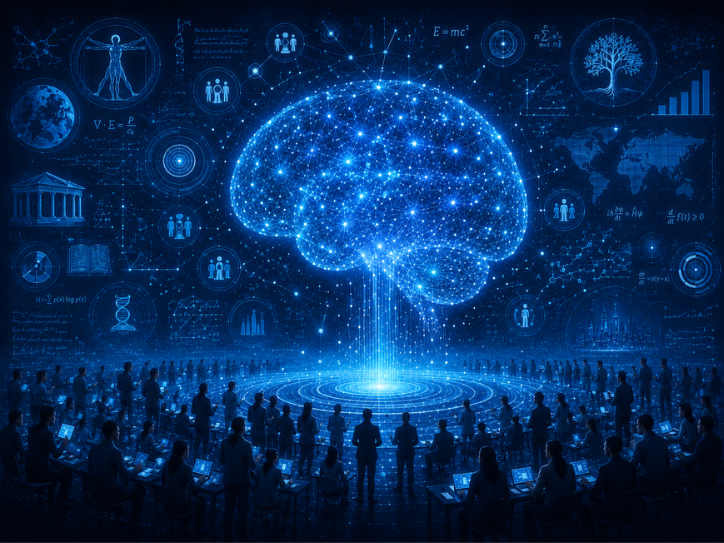
Dr. Saulius Norvaišas, Collective Intelligence: Society Learning to Use Its Own Mind, Part I: Society Has More Intelligence Than It Knows How to Use
We are pleased to present a seven-part series by Dr. Saulius Norvaišas exploring the concepts of Collective Intelligence and omnicracy. It offers a fresh perspective on a fundamental question: How can society better use the intelligence it already possesses?
Dr. Saulius Norvaišas, Collective Intelligence: Society Learning to Use Its Own Mind, Part II: Why Opinions Are Not Yet Collective Intelligence
The second article in the series "Collective Intelligence: Society Learning to Use Its Own Mind" explores the idea of why many voices are not yet Collective Intelligence; they are only the raw material from which Collective Intelligence can be built.
Dr. Saulius Norvaišas, Collective Intelligence: Society Learning to Use Its Own Mind, Part III: Why the Idea Must Stand Without the Name
The article argues that valuable ideas are often overlooked because people judge the status, reputation, or authority of the person presenting them rather than the quality of the idea itself. It introduces the principle of accountable anonymity, a key feature of Collective Intelligence, which allows ideas to be evaluated fairly without social bias while still ensuring that contributors remain responsible and receive recognition for their contributions.
Dr. Saulius Norvaišas, Collective Intelligence, Society Learning to Use Its Own Mind, Part IV: How the Mechanism of Collective Intelligence Works
This article explains the practical mechanism of Collective Intelligence—a structured process that enables individuals to contribute ideas, evaluate them fairly, and build solutions together. Using everyday examples, it demonstrates how anonymous yet accountable participation, thoughtful evaluation, and systematic analysis can turn scattered opinions into shared wisdom.
Dr. Saulius Norvaišas, Collective Intelligence, Society Learning to Use its Own Mind, Part V: How Collective Intelligence Liberates Competence
In an era of increasing complexity, no organization, government, or society can afford to ignore the intelligence already present among its people.
This article argues that true competence is found throughout society—not only among people with titles or authority. It explains how Collective Intelligence helps identify and use the best ideas by evaluating them on their merit, allowing organizations and societies to make wiser, more effective decisions.
Dr. Saulius Norvaišas, Collective Intelligence: Society Learning to Use Its Own Mind, Part VI: Why Better Decisions Make Society Wealthier
Why do some societies grow wealthier while others keep paying for the same problems? In Part VI of his Collective Intelligence series, Dr. Saulius Norvaišas explores how better shared decisions can reduce waste, prevent costly mistakes, and turn existing resources into greater social and economic value.
Dr. Saulius Norvaišas, Collective Intelligence: Society Learning to Use Its Own Mind, Part VII: Why a Meaningful Life Begins with Meaningful Contribution
A meaningful life grows from the opportunity to contribute our knowledge, experience, and ideas to decisions that shape the world we share, rather than simply receiving services or expressing opinions that lead nowhere. The article presents Collective Intelligence as a structured process in which people develop and evaluate solutions, recognize contributions on their merits, and connect decisions with responsible action and visible results. By enabling people to become co-creators of society, this approach can strengthen purpose, belonging, and shared responsibility while laying the groundwork for Omnicracy, a form of collective self-governance.